ServicesWhole-house carbon filtration
Whole-House Carbon Filtration in Lewisville
We install carbon filtration where water enters your home, so the shower, the kitchen tap and the ice maker all lose that pool smell. Every system goes in with shutoffs, a bypass and a proper mount, because those details decide how well it holds up.
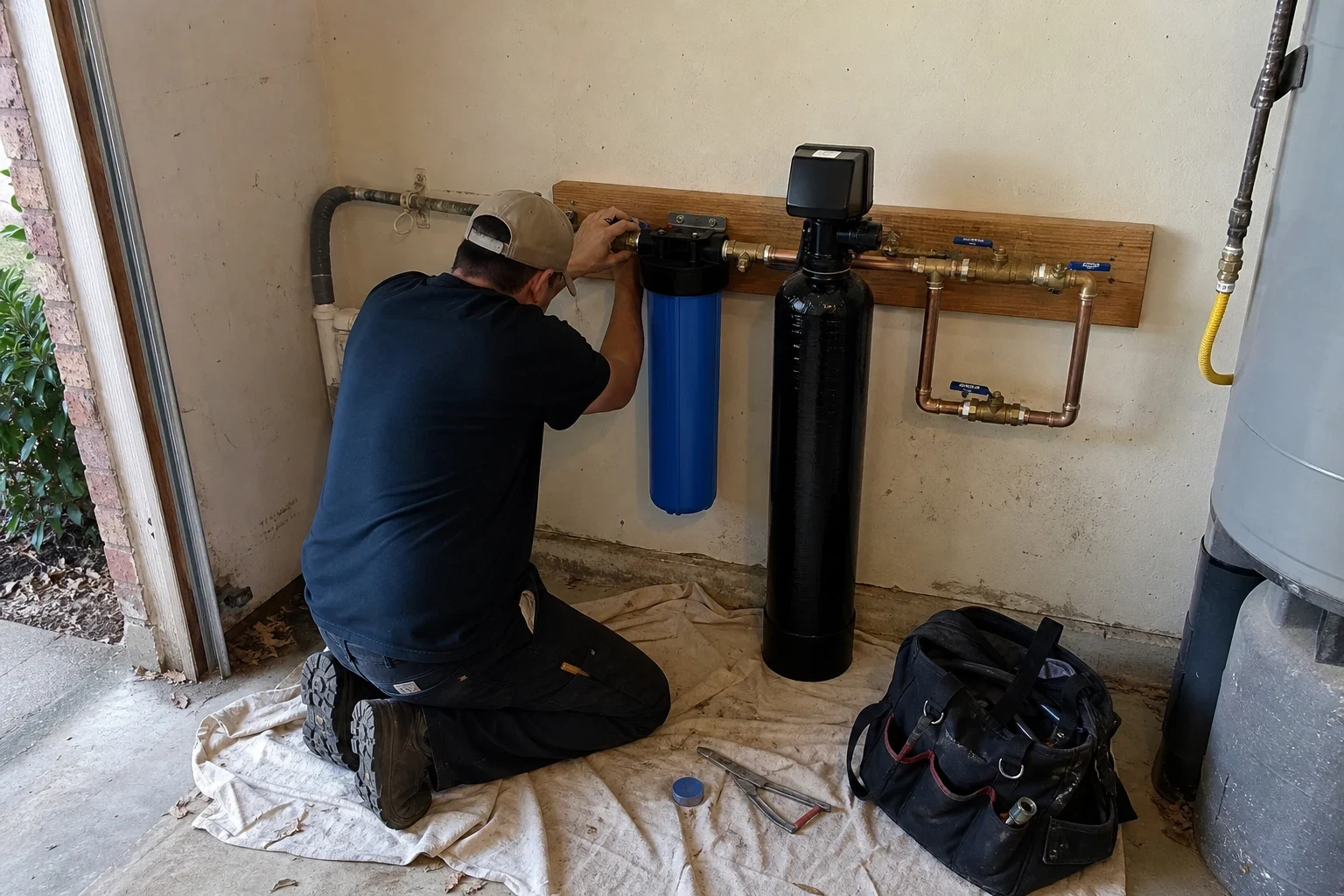
How carbon filtration works at the main line
Utilities add a disinfectant so tap water reaches you safe to drink. That chlorine or chloramine does its job well, but plenty of people can taste it in morning coffee and smell it in a steamy shower. As water moves through a bed of activated carbon, those compounds cling to the carbon's surface and stay behind. The same process also cuts many of the organic compounds that give water an earthy or musty note.
Because the system sits on the main line, every outlet in your home gets treated water at once. That makes sense when the taste and smell bother you everywhere, not only at the kitchen sink. If drinking water is the single concern, under-sink reverse osmosis may be the better fit. And if you are not sure what your water contains, start with water testing so the equipment answers a real result rather than a guess.
What goes into a careful install
- The right carbon for your water
- Standard activated carbon handles chlorine well. Chloramine is slower to break down, so where a utility uses it we fit catalytic carbon, which is made for that job.
- A sediment stage ahead of the carbon
- A simple prefilter catches grit before it reaches the carbon bed. That keeps the carbon working on taste and odor instead of clogging with debris, and it lengthens its life.
- Bypass and isolation valves
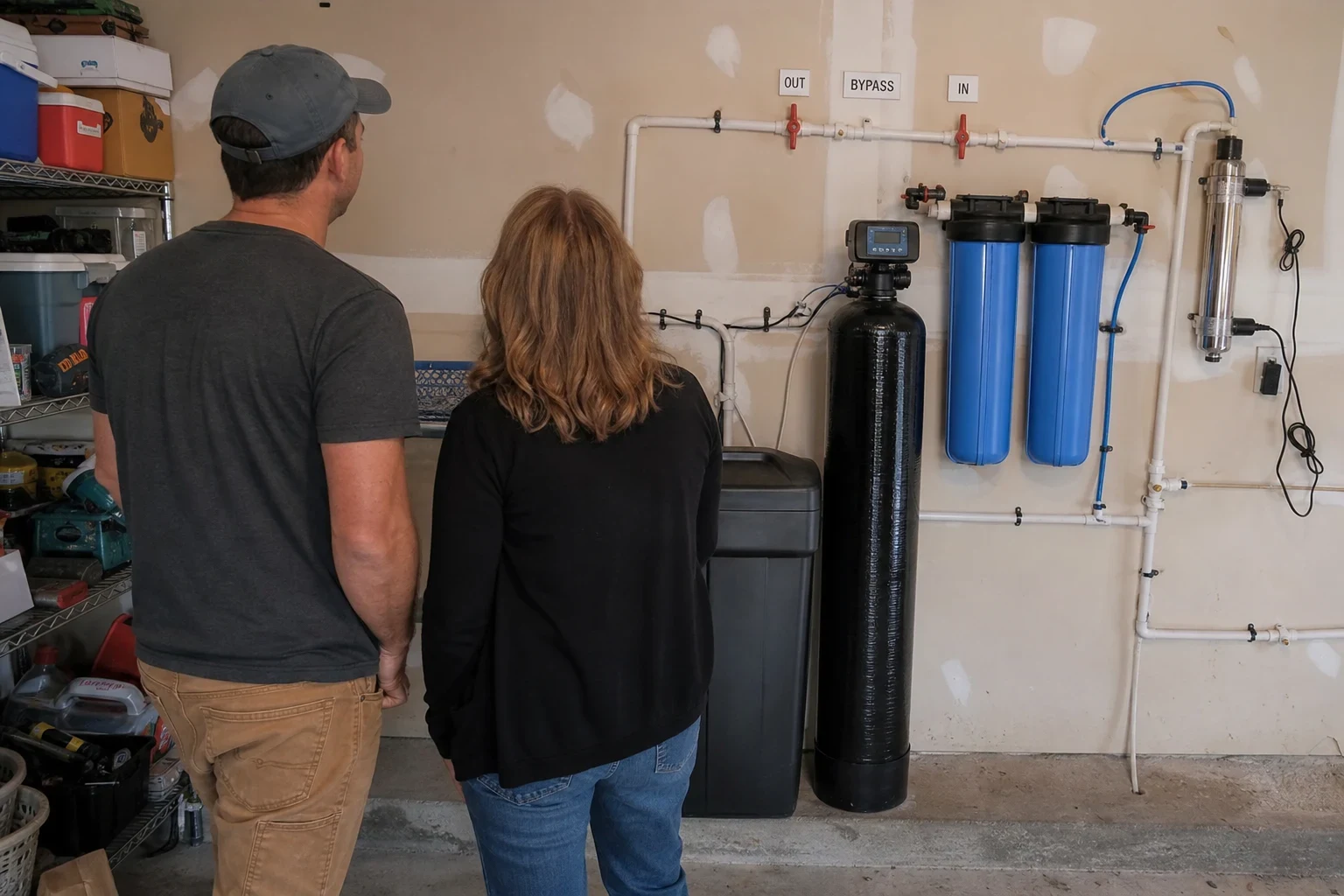
- We plumb shutoffs on both sides and a bypass loop. You can keep water running to your home while a cartridge is changed or the tank is serviced.
- A solid mount and grounded piping
- Housings are fixed to a wall bracket or set on a level pad, never left hanging on the pipe. Where we cut into metal piping, we add a grounding jumper across the new section so the electrical ground path through your plumbing stays continuous.
- A plan for irrigation lines
- Sprinklers and hose bibs rarely need filtered water. When the layout allows, we tee those off ahead of the system so your carbon is not spent on the lawn.
Signs carbon filtration is worth a look
Your tap water smells like a pool
A chlorine smell that is strongest first thing in the morning or in a hot shower is exactly what carbon is built to reduce.
Coffee and tea taste flat or sharp
Disinfectant flavor carries straight into anything you brew. Filtering at the main line fixes it at every tap, including the fridge.
Dry skin or hair after showering
Some people find their skin and hair feel better once chlorine is out of shower water. It is a common reason families choose a whole-house system over a single faucet filter.
You are filtering in five places already
Pitcher, shower head, fridge filter, faucet attachment. One system at the main line can replace most of that upkeep.
How the work runs
- 1
A conversation and a look at your plumbing
We ask what you notice and where, then find where your main line comes in. In many area homes that is the garage, near the water heater, which usually gives good access.
- 2
A written recommendation
You get a plain explanation of the system we suggest, why, and what the line items are. If testing would change the answer, we say so before you commit.
- 3
Installation day
We shut the water off, lay down protection, cut in the valves and bypass, mount the housings and fit the grounding jumper. Where your city requires a plumbing permit, we pull it.
- 4
Flush, check and walk-through
We flush the new carbon until the water runs clear, check every joint under pressure and show you how the bypass works. We clean up and leave you with the replacement schedule.
What shapes the price
Every home is plumbed a little differently, so we price after we have seen the main line. The estimate lists each part and the labor separately, so you can see what you are paying for.
- Cartridge housings or a carbon tank
- Large cartridge housings cost less up front and suit smaller households. A tank system holds far more carbon, runs longer between changes and handles higher flow.
- Standard or catalytic carbon
- Water treated with chloramine needs catalytic carbon, which is priced above the standard grade. It appears on your estimate only when the way your utility disinfects makes it necessary.
- Access and pipe material
- An open garage wall with copper or PEX is straightforward. A main line behind finished drywall or in a tight closet takes more time.
- Irrigation split and extras
- Teeing off sprinkler lines, adding pressure gauges or building a pad for a tank each add parts and labor. Any required permit is listed on its own line.
Questions about whole-house carbon filtration
Something not covered here? (972) 632-3143
Will a carbon system lower my water pressure?
A correctly sized system should not cause a pressure drop you notice. Undersized housings are the usual culprit, so we size for your home's peak flow, such as two showers and a dishwasher at once. A clogged sediment prefilter can also reduce pressure, which is a reminder that it is due for a change.
Does carbon filtration soften water?
No. Hardness comes from dissolved minerals, mainly calcium and magnesium, and carbon lets those pass straight through. When scale is what bothers you, a hardness test comes first. We suggest a softener only when the numbers justify one.
How long does the carbon last before it needs changing?
Carbon life comes down to how much of it the system holds and how much water your household runs through it. Catalytic and standard grades also wear at different rates. Cartridge housings usually need fresh media sooner than a tank does. We leave a written schedule matched to your setup, and our filter replacement and maintenance service can take care of the changes.
Do I still need reverse osmosis for drinking water?
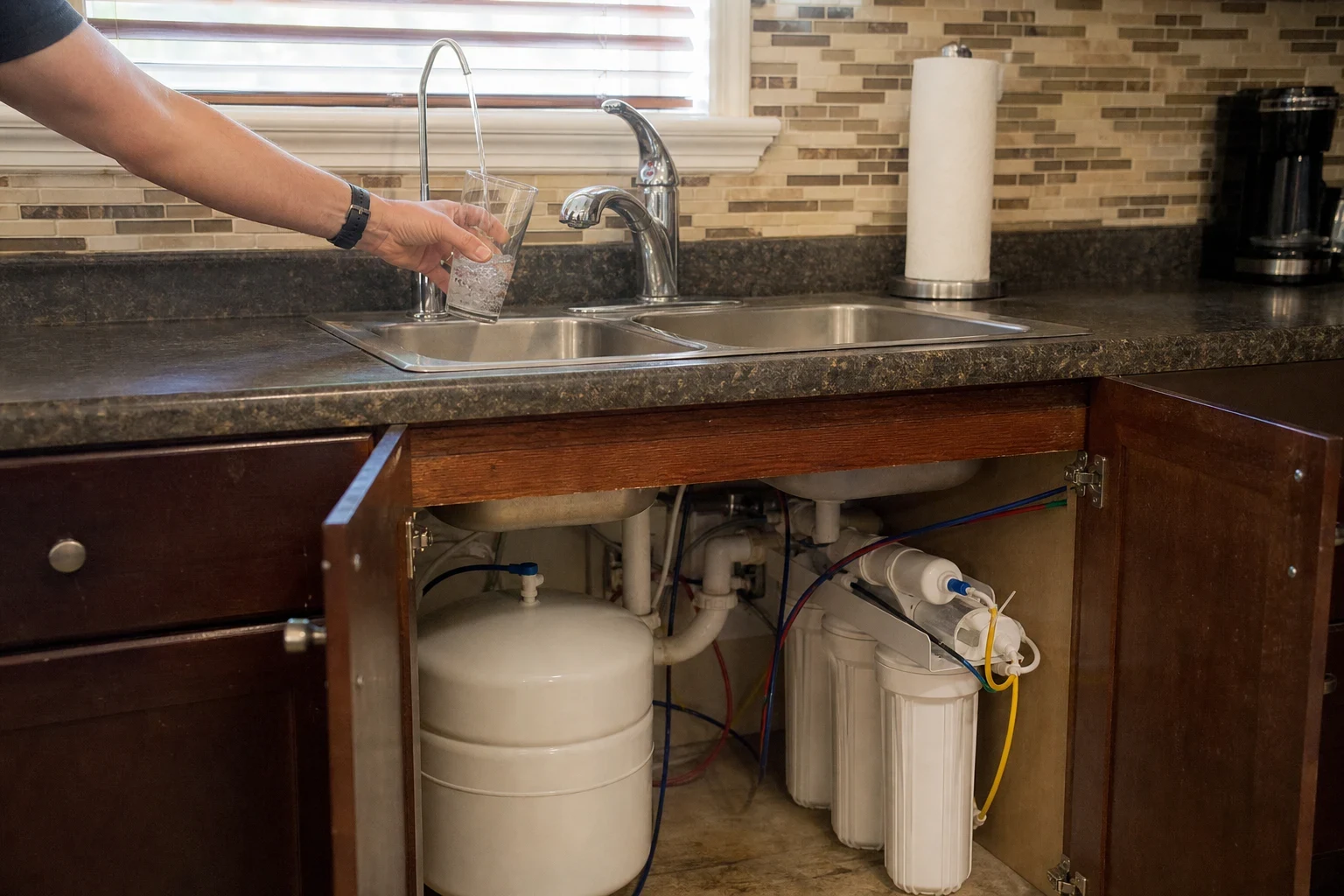
Not always. Many people are happy with carbon-filtered water at the kitchen tap. If you have older plumbing or want an extra step for drinking and cooking water, under-sink reverse osmosis pairs well with a whole-house carbon system.
Will it remove iron or rust staining?
Carbon is not designed for iron, and iron can foul the carbon bed quickly. If you see orange staining, iron and sediment filtration ahead of the carbon is the better approach.
Better water from every faucet, plumbed with care
Let us know what bothers you about your water and roughly where the main line enters your home. We will explain the system we would fit and how it would be piped before anything is cut.