ServicesIron and sediment filtration
Iron and Sediment Filtration in Lewisville
Rust-tinted marks on porcelain, sand caught in shower screens and pressure that fades over a few months usually trace back to iron or sediment. We read your water first, match the filter to your home's peak flow, and plumb it in with the details that let it run cleanly for years.
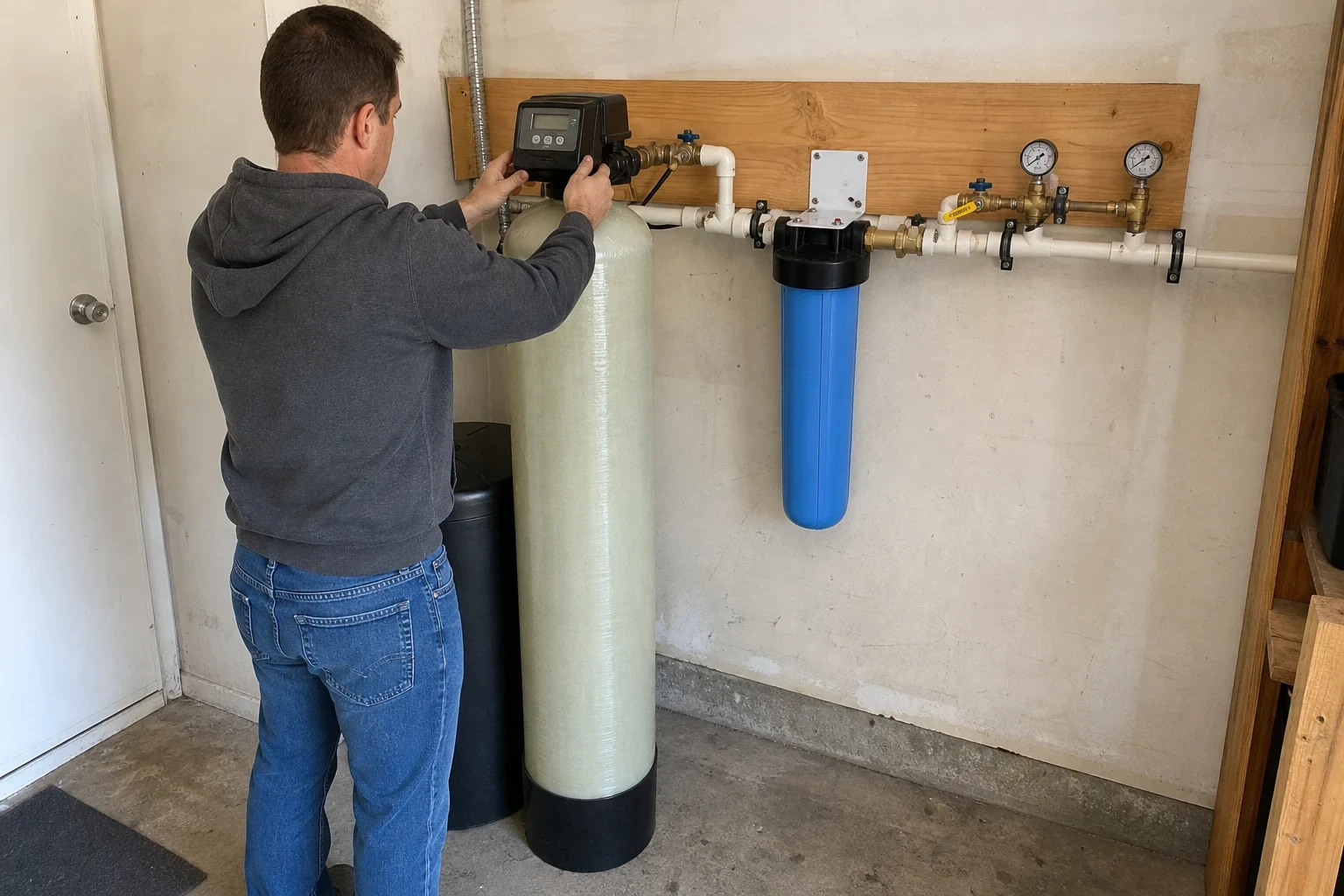
Choosing between a cartridge and an iron system
Two different problems hide behind the same symptoms. Loose particles, such as sand, flakes of scale and bits of rust, can be strained out by a sediment housing before they reach faucets and the water heater. Dissolved iron is invisible until it meets air, so an iron filter first converts it into solid particles, traps them in a media bed and then flushes that bed on a timer. Many homes are best served by a pairing, where a sediment stage guards the iron tank or a carbon system further down the line.
Plenty of homes need only one of them. A burst of grit after utility work on the street, or flakes shed by old galvanized pipe, can often be handled with a single well-chosen cartridge housing. Stains that keep coming back, a metallic edge to the taste, or water that clouds after sitting in a glass point to dissolved iron and a backwashing unit. We confirm which one you are dealing with before suggesting equipment, so most of these jobs begin with water testing.
What the installation includes
- A test before a recommendation
- We measure iron, pH and visible sediment at your tap. The numbers decide the media and the filter size, not a sales sheet.
- Sizing to real flow
- A filter that is too small drops your pressure when two showers run at once. We size the tank or housing to your home's peak demand, so pressure stays steady.
- Bypass valve and unions
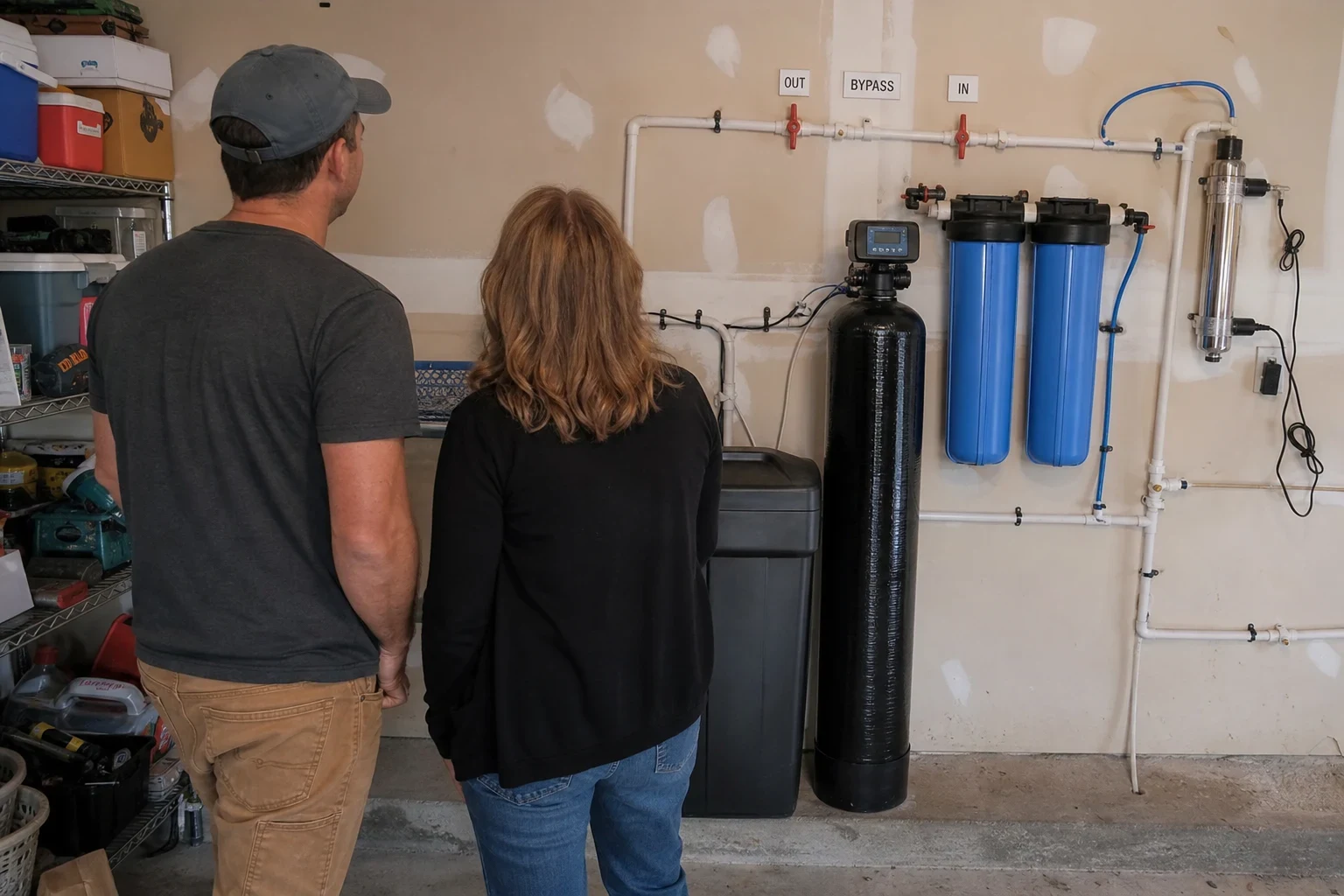
- Every system gets a bypass loop and threaded unions. You can keep water flowing during service, and the unit can come out later without cutting pipe.
- Pressure gauges on both sides
- Gauges before and after the filter show exactly when a cartridge is loading up. You change it when it needs changing, not by guesswork.
- A proper backwash drain
- Backwashing systems need a drain line with an air gap and a steady slope so dirty rinse water can never siphon back. We route it cleanly and secure it along its run.
- Mounting and cleanup
- Housings go on a solid bracket, tanks sit level on a firm base, and we leave the area as tidy as we found it.
Signs iron or sediment is reaching your taps
Rust-colored stains
Orange or brown rings in toilets, tubs and sinks are the classic mark of dissolved iron. Bleach-based cleaners can make them set harder.
Grit in aerators
Sand or dark flecks collecting in faucet screens and shower heads point to sediment moving through the lines.
Laundry turning dingy
Whites that slowly go yellow or tan, even with good detergent, often trace back to iron in the wash water.
Metallic taste or cloudy glasses
Water that tastes like a coin, or clears only after it sits, usually carries iron that is oxidizing in the glass.
Falling pressure at fixtures
A gradual drop at one or two fixtures can be sediment building up in valves and cartridges rather than a plumbing fault.
What moves the price
The two biggest drivers are what your water carries and where your plumbing runs. A single cartridge housing and a full backwashing iron system sit at opposite ends of the range. Every part and step is itemized on the estimate, so the final bill matches what you agreed to.
Iron level and type
Light iron or loose grit can usually be handled with cartridges. Heavier dissolved iron calls for a media tank, and iron bacteria may need an extra oxidation stage ahead of it.
Household flow
More bathrooms and higher peak demand mean a larger tank or wider housing to hold pressure.
Location and access
When the main enters along an open garage wall, cutting in is quick and tidy. A line tucked behind drywall or inside a cramped closet takes more time to reach and to finish neatly.
Drain and power
Backwashing filters need a nearby drain and an outlet. Running either a longer distance adds materials and time.
Permits
Where the city requires a plumbing permit for this work, we pull it and schedule the inspection, and that cost is listed on the estimate.
How the work goes
- 1
Talk and test
We start with a phone conversation about what you are seeing, then test your water at the house. You get the readings and an honest view of whether a cartridge or a backwashing system fits.
- 2
Written estimate
We put the recommended equipment, materials and labor on a line-item estimate. If a simpler option will do the job, we say so.
- 3
Installation day
We shut off water briefly, cut in at the main line where it enters your home, and protect the floor and nearby surfaces. Most installs fit within a single visit, and we keep downtime short.
- 4
Startup and walkthrough
We flush the system, set the backwash schedule, check every joint under pressure and show you the bypass and gauges. You will know how to read them before we leave.
Questions about iron and sediment filtration
Will a water softener fix iron stains?
A softener's resin will take out a little dissolved iron, but the iron gradually coats the beads and shortens their working life. Placing a dedicated iron filter ahead of the softener protects the resin and handles the staining far more reliably. We only recommend a softener once a hardness test shows it is worth having.
Do I need this if I am on city water?
Often not. City water rarely carries much dissolved iron, but sediment can show up after main work or from older pipe inside the house. A test tells us whether a simple sediment stage is enough.
How often does a sediment cartridge need changing?
It depends on how much your water carries. The gauges show it plainly: when the pressure difference across the filter grows, the cartridge is due. Our filter replacement and maintenance visits can handle that for you.
Will the backwash waste a lot of water?
A backwashing filter rinses itself on a set schedule, typically overnight. We set the frequency from your test results and usage so it cleans the media without running more than needed.
Can this work alongside carbon or reverse osmosis?
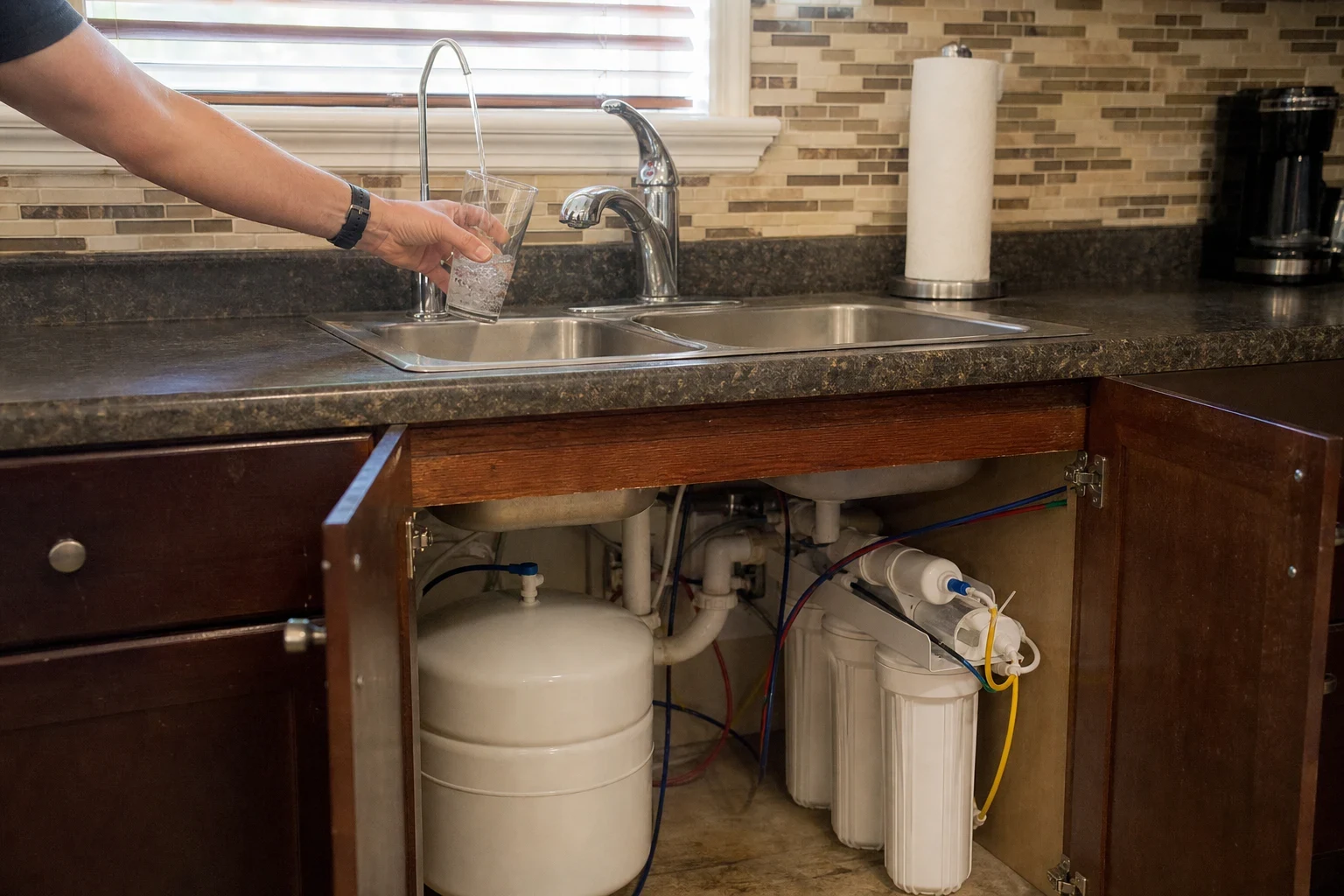
Yes, and it protects them. Removing iron and grit first keeps whole-house carbon filtration and under-sink reverse osmosis from clogging early.
Get clear water and a filter built to last
Describe the stains, grit or taste you have been noticing, and we will set up a test in your home. The readings and our recommendation come before any installation is planned.