ServicesWater softeners
Water Softeners in Lewisville, After a Hardness Test
Before we suggest a softener, we measure the hardness coming out of your own faucet. When the reading supports one, we size the unit to your water and household and finish every fitting with care. When it doesn't, we say so plainly and point you toward what fits better.
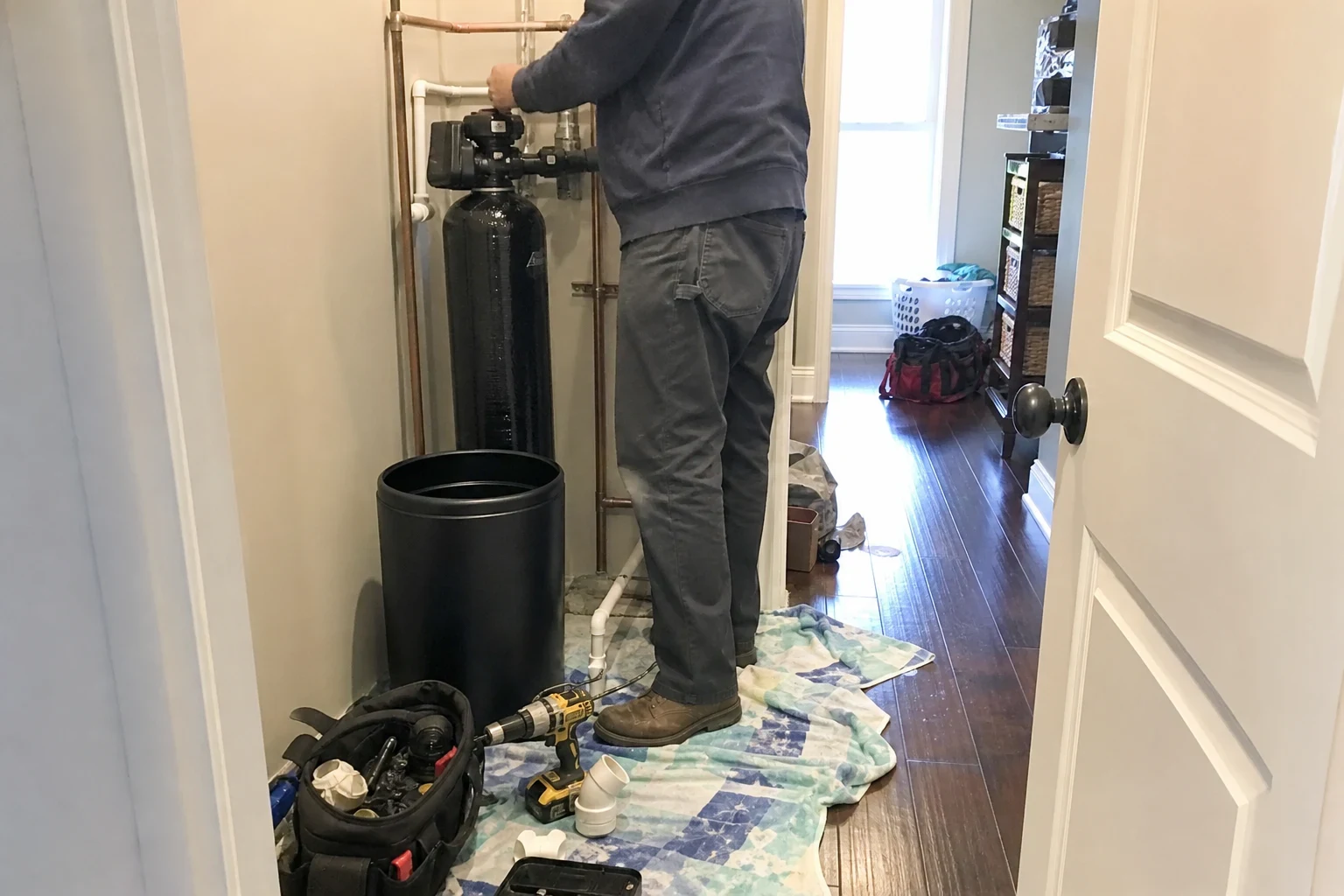
A softener should answer a number, not a guess
Softeners do one job. They swap the calcium and magnesium in your water for sodium or potassium, which stops chalky rings on faucets, haze on glassware and the gradual layer of scale that forms inside a water heater. They won't fix chlorine taste, sediment or most other complaints, so we take a hardness reading before recommending anything.
When the test supports a softener, its long life comes down to small things: a bypass valve you can reach, a drain line with a real air gap, a brine tank sitting level, and a hardness setting programmed from your actual reading instead of a factory default. We take our time on each of those, because they decide whether the system runs quietly for years or needs attention every few months.
What the work includes
- Hardness reading at your tap
- We measure hardness on site and look for iron as well, since even a small amount affects the resin, the settings and whether a prefilter belongs in front. You see the result alongside us and hear what it means for your home.
- Sizing to your water and usage
- We work out resin capacity from two numbers: the grains of hardness in your reading and the gallons your family runs through each day. Too large a unit burns salt and leaves resin sitting unused, while too small a unit regenerates constantly and wears out early.
- Bypass valve and clean connections
- Every install gets a bypass so you can isolate the softener without shutting off the house. We use unions at the connections so future service doesn't mean cutting pipe.
- Drain line with a proper air gap
- The regeneration drain runs to an approved drain point with an air gap, so wastewater can never siphon back toward your supply. A sloppy drain is one of the most common faults we find on older installs.
- Brine tank set level, with an overflow line
- We seat the brine tank on a flat, stable surface and run its overflow to the drain. A tank that rocks or sits on a slope can misread salt levels and leak over time.
- Programming and a walkthrough
- We set the hardness value, regeneration time and salt dose from your test, then show you how to add salt and use the bypass.
When a hardness reading is worth getting
Crusty rings on faucets and showerheads
White, crumbly deposits around aerators, shower heads and glass doors suggest minerals in the supply. A reading shows whether the level is high enough to treat.
Glasses that come out cloudy
If the dishwasher leaves a haze on glassware even with rinse aid, hardness is a likely culprit.
Soap that barely foams
Minerals tie up soap, so shampoo and detergent struggle to lather and leave a film on skin and tubs.
A water heater that pops or rumbles
Scale settling in the bottom of a tank heater makes noise and cuts efficiency. It is worth checking before the heater needs replacing.
An inherited softener with unknown settings
If your home came with a softener and no one knows how it was programmed, a test shows whether it is still working or simply burning through salt.
What moves the cost
Your price is built from two things: the test result and the plumbing we find. We walk through each line of the estimate before any work starts, and we won't quote a softener your water doesn't call for.
Your reading and your water use
Capacity scales with both. Higher mineral content or a bigger household calls for more resin, and a larger tank costs more than a compact one.
Existing loop or new plumbing
A ready softener loop keeps labor down. If we need to run new lines to reach the main, that adds time and material.
Drain access
A drain point close to the unit is simple. A long run or a location with no nearby drain takes more work to do correctly.
Iron and other findings
If the test shows iron or sediment, a prefilter or a different setup may be needed to protect the resin.
Protecting exposed lines
A garage install may need insulation on exposed pipe so a hard winter freeze doesn't crack a fitting.
How a softener job runs
- 1
Test and an honest answer
We test your water and look at your plumbing. If hardness is low, we say so and suggest something better suited, such as whole-house carbon filtration or iron and sediment filtration.
- 2
Written estimate
You get a line-item estimate covering the unit, fittings and any plumbing changes, so there are no surprises on install day.
- 3
Installation
Many homes around Lewisville have a softener loop already plumbed in the garage, which makes for a cleaner install. We protect the floor, make the connections, set the drain and brine tank, and pressure-check every joint before we leave it.
- 4
Programming, cleanup and follow-up
We program the unit, run a regeneration cycle, retest the treated water and clear away every scrap of packaging and pipe.
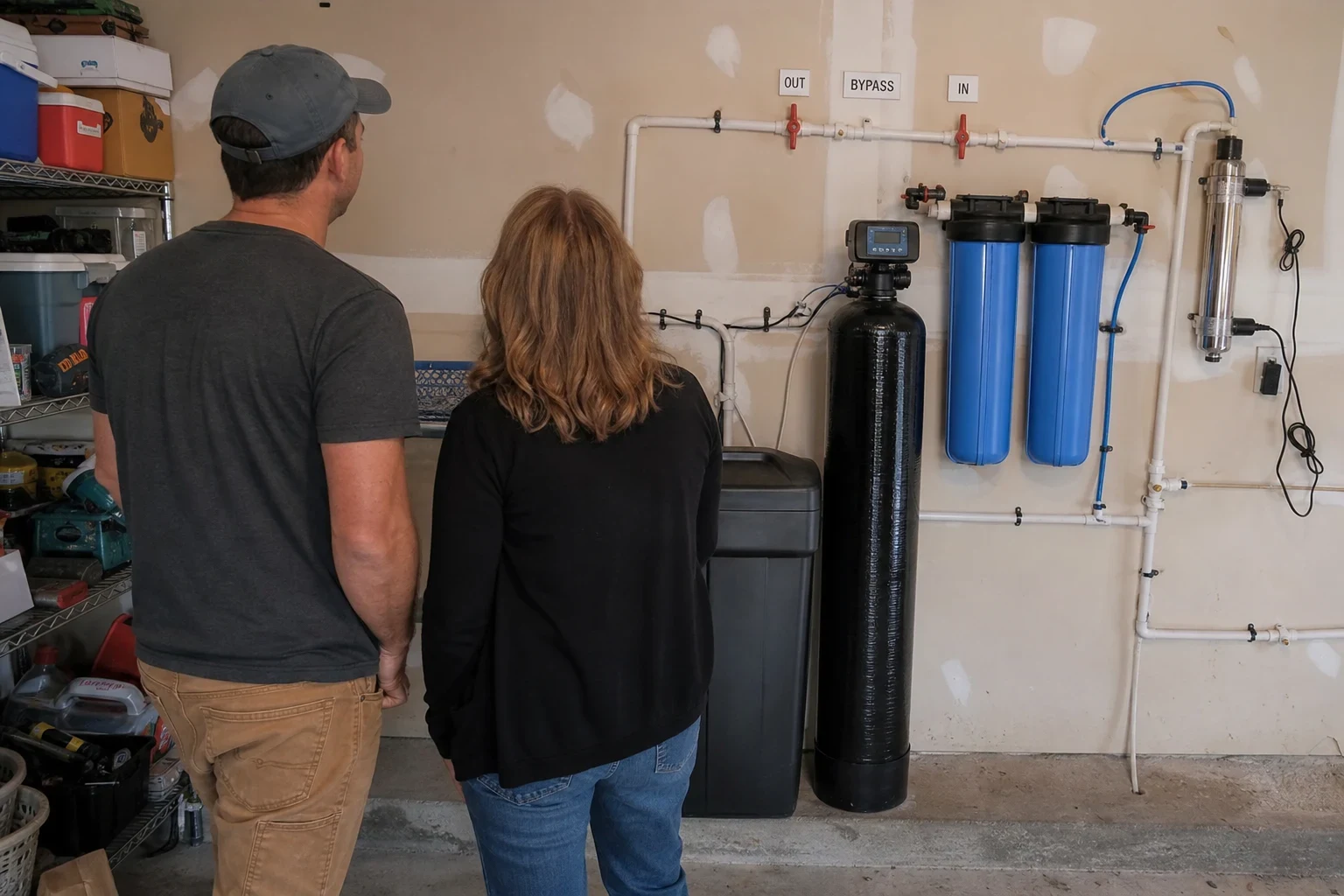
Water softener questions
Why won't you just install a softener?
Because it only treats hardness. If your water is already fairly soft, a softener costs you salt and upkeep without a visible benefit. We would rather test first and put your money toward the problem you actually have.
Will I taste salt in softened water?
Most people can't pick it up, because the sodium added is in proportion to the minerals taken out, and that amount is small at ordinary levels. If you'd rather drink and cook with water that skips the added sodium, under-sink reverse osmosis at the kitchen tap pairs well with a softener. Potassium chloride can also be used in place of salt.
How much upkeep does a softener need?
Mostly adding salt when the brine tank runs low and glancing at the settings now and then. We can also check it during filter replacement and maintenance visits.
Can you look at the softener I already have?
Yes. We test the water going in and coming out, check the drain and brine line, and reset the hardness value if it was never programmed correctly. Sometimes that's all an older unit needs.
Do you serve towns outside Lewisville?
We work across the area, including Flower Mound, Highland Village, Coppell and Carrollton. See our service areas page for the full list.
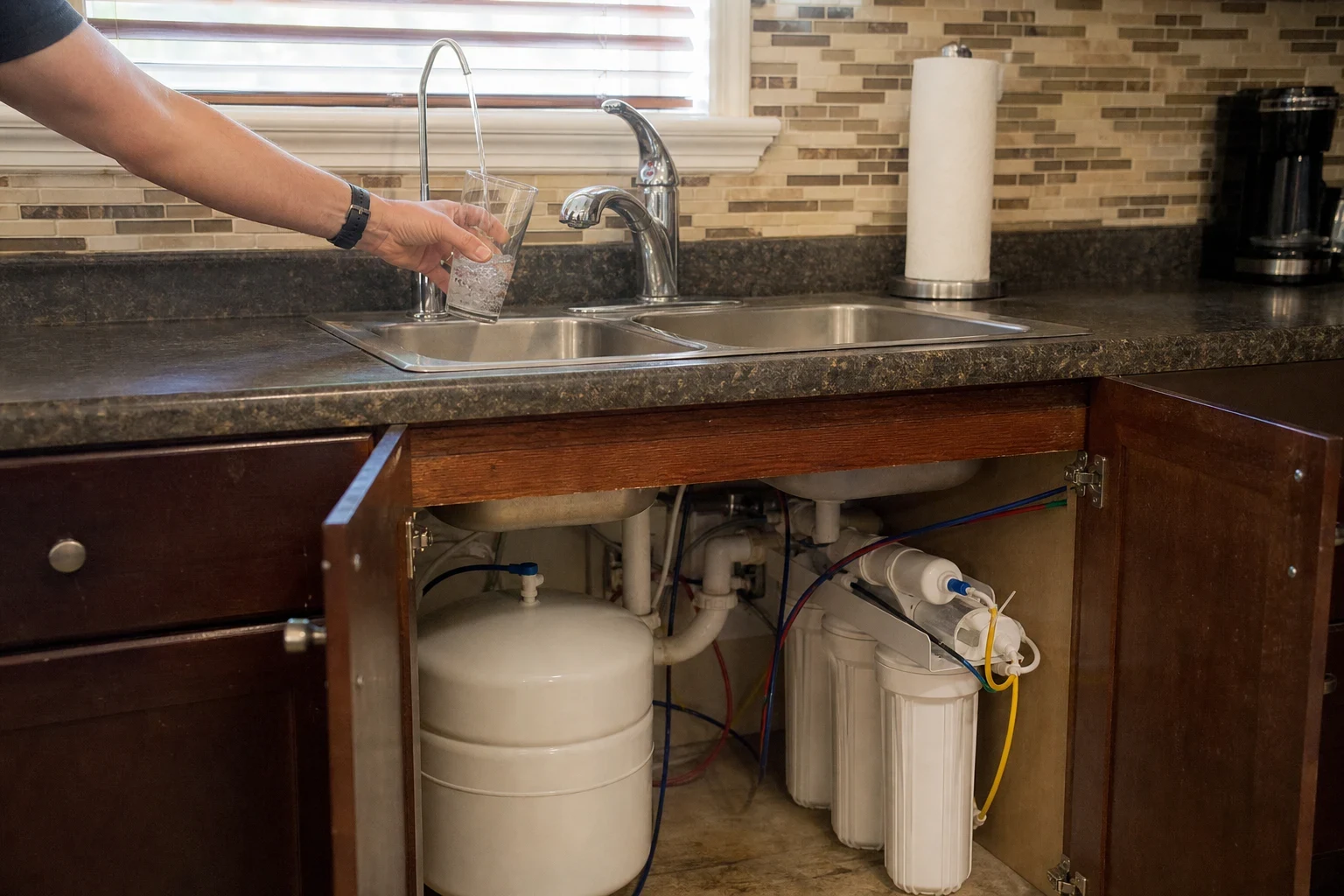
Find out if a softener makes sense for your home
We'll test your hardness, show you the number and give you a straight recommendation. If a softener fits, we'll install it with the same care on every fitting.