ServicesWater testing
Water Testing in Lewisville
Every sound filtration decision starts with a measurement. We draw samples with care, check the things that matter in your home and walk you through each number in plain terms, so any equipment you consider answers a problem you can see on paper.
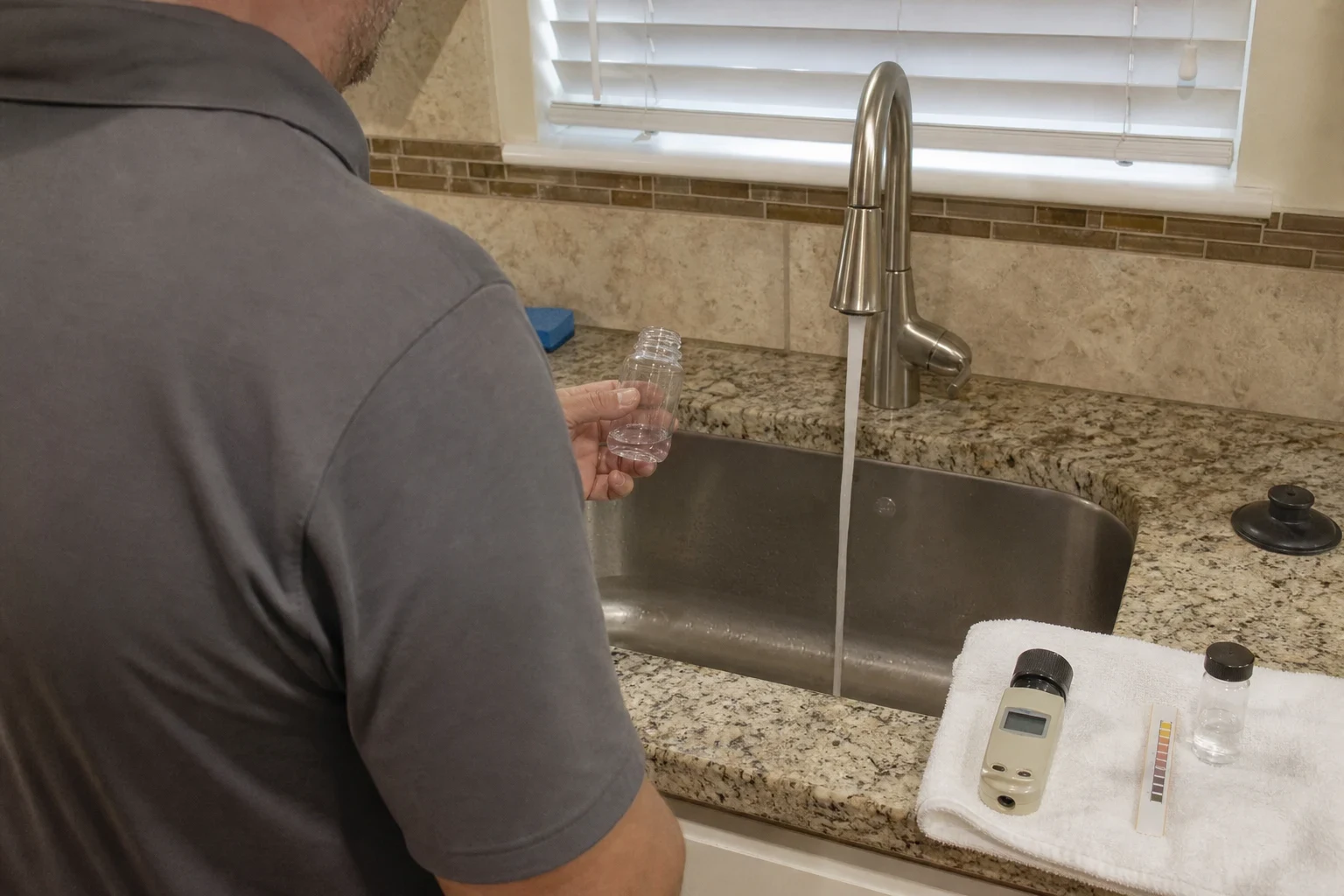
Know your water before you choose equipment
Municipal water in North Texas is treated and monitored, and for many homes it needs nothing more than a better taste. For others, the plumbing inside the walls, a hardness level that leaves scale on fixtures, or a private well changes the picture. Testing is how we tell those situations apart.
A test result is only as good as the sample behind it. We draw water from the right tap, at the right point in the flow, into clean containers, and we note how the water was run before we filled them. Those small habits decide whether the numbers describe your water or just the bottle.
When the results are in, you get an honest read. Sometimes that means a whole-house carbon filter or an under-sink reverse osmosis system. Sometimes it means you are fine as you are.
What a water test with us includes
A short conversation first
We ask what you notice: taste, odor, spotting on glass, stains in the tub, or simply a wish to know. That tells us which measurements to prioritize instead of running a generic panel.
Careful sample collection
We remove aerators where it matters, choose cold taps, and take first-draw or flushed samples depending on what we are looking for. A first-draw sample shows what sits in your pipes overnight, while a flushed sample shows what arrives from the main.
On-site readings
Hardness, chlorine, pH, total dissolved solids and iron can be checked at your kitchen counter. You see the readings as we take them.
Lab testing when it is warranted
For questions an in-home kit cannot answer well, such as lead from older plumbing or a broader well panel, we send samples to an independent lab. We explain why before we do it.
A written summary
You get the results in plain language, with each number set next to what it means for your fixtures, your appliances and your drinking water.
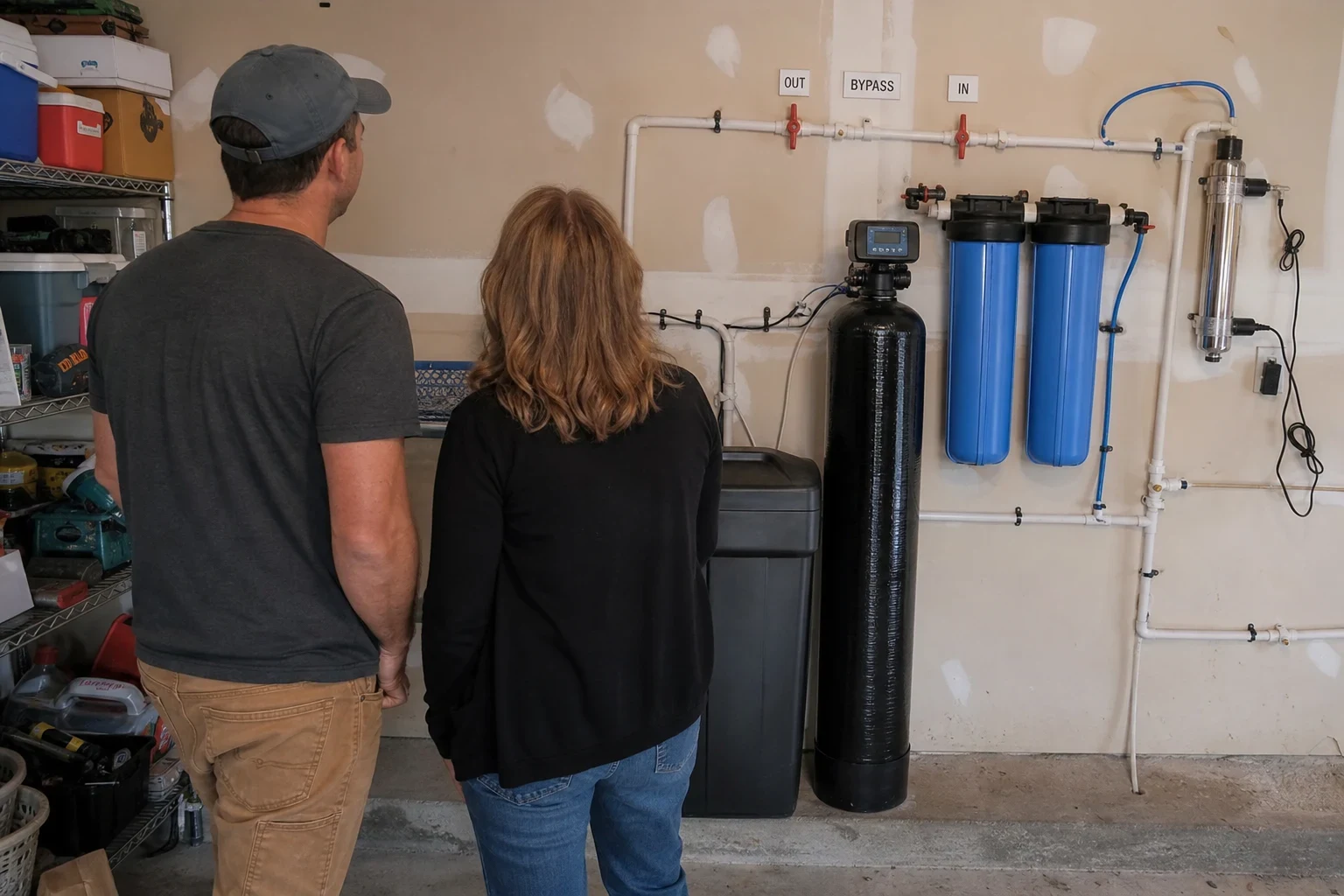
When a water test makes sense
- A pool-like note in your glass
- Treated city water often carries a faint chlorine taste or odor. Measuring the actual level shows whether a carbon filter would make a real difference.
- White crust on fixtures
- Scale on showerheads, faucets and the inside of the kettle points to hardness. We measure it before anyone mentions a softener.
- Orange or brown staining
- Rust-colored rings in toilets or on laundry usually mean iron or corroding pipe. A test separates the two, which changes the fix entirely.
- Older plumbing
- If your home has original galvanized lines or older solder joints, a first-draw sample is a sensible check on what your drinking water picks up overnight.
- A private well
- Well water has no utility testing behind it. Periodic testing is the only way to know what is coming out of the ground.
- Before buying a system
- If someone has quoted you equipment without measuring your water, test first. It is the simplest protection against being oversold.
How the visit runs
- 1
You call and describe the concern
We talk through what you have noticed and set a time. If your home is on a well, we will mention any preparation, such as not running a lot of water beforehand.
- 2
We take samples and readings
We work at your kitchen sink and, where useful, a bathroom tap or the point where water enters your home. Counters are wiped down and nothing is left behind.
- 3
We go over what we found
On-site results are explained before we leave. If lab samples were taken, we follow up by phone once the results return.
- 4
You decide what, if anything, comes next
We recommend equipment only when a number supports it, and we say so plainly when it does not.
What affects the cost of testing
Most visits are straightforward, and we explain the cost by phone before we come out. The price depends mainly on how much needs measuring and whether a lab is involved. You will know which applies before any sample is sent away.
- In-home readings or lab analysis
- Counter-top readings cover the common questions. Independent lab work for lead or a full well panel adds cost and time.
- Number of sample points
- A single kitchen tap takes little time. Checking water at the entry line, a bathroom and an outdoor spigot means more samples and more readings to compare.
- City water or well
- Wells call for a wider set of tests, since nothing upstream has checked the water for you.
- Follow-up testing
- After a filter is installed, a second test confirms it is doing its job. That is optional and quoted separately.
Water testing questions
- Is my city water safe to drink?
- Treated municipal water has to meet state and federal standards, and most of the time it does. What a utility cannot control is your home's own plumbing. Testing at your tap tells you what reaches your glass.
- Can I just use test strips from the hardware store?
- Store strips give a ballpark reading for hardness or chlorine, but the color bands are hard to judge with any precision. They also cannot tell you about lead or cover a full well panel. We use calibrated meters at your counter and send samples to a lab when the question calls for it.
- Will you try to sell me a softener?
- Only if your hardness reading supports one. Plenty of homes are better served by a carbon filter or nothing at all, and we will tell you that.
- How long do lab results take?
- It depends on the lab and the tests ordered. We give you an expected window when the samples go out and call you when the report is back.
- Do I need to be home?
- Yes. We need access to your taps and, ideally, a few minutes with you to talk through what you have noticed and what the readings mean.
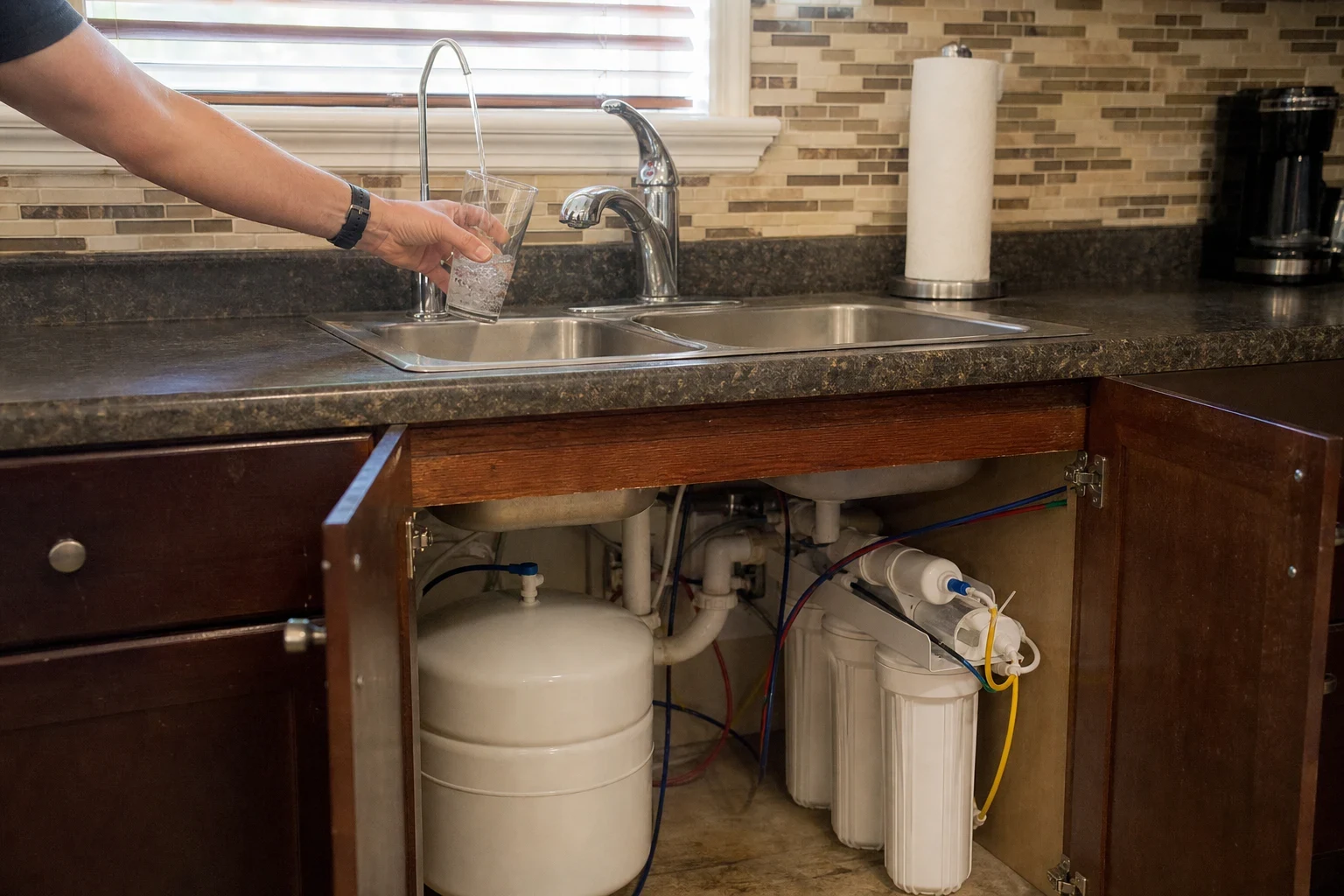
Start with the facts about your water
A careful test takes the guesswork out of every decision that follows. We serve Lewisville and nearby towns including Flower Mound, Highland Village and The Colony.