ServicesFilter replacement and maintenance
Filter Replacement and Maintenance in Lewisville
A filter system is only as good as its last service. We replace cartridges, clean and sanitize housings, fit fresh O-rings and check every fitting, so your home keeps getting clean water without slow drips or a filter quietly doing nothing.
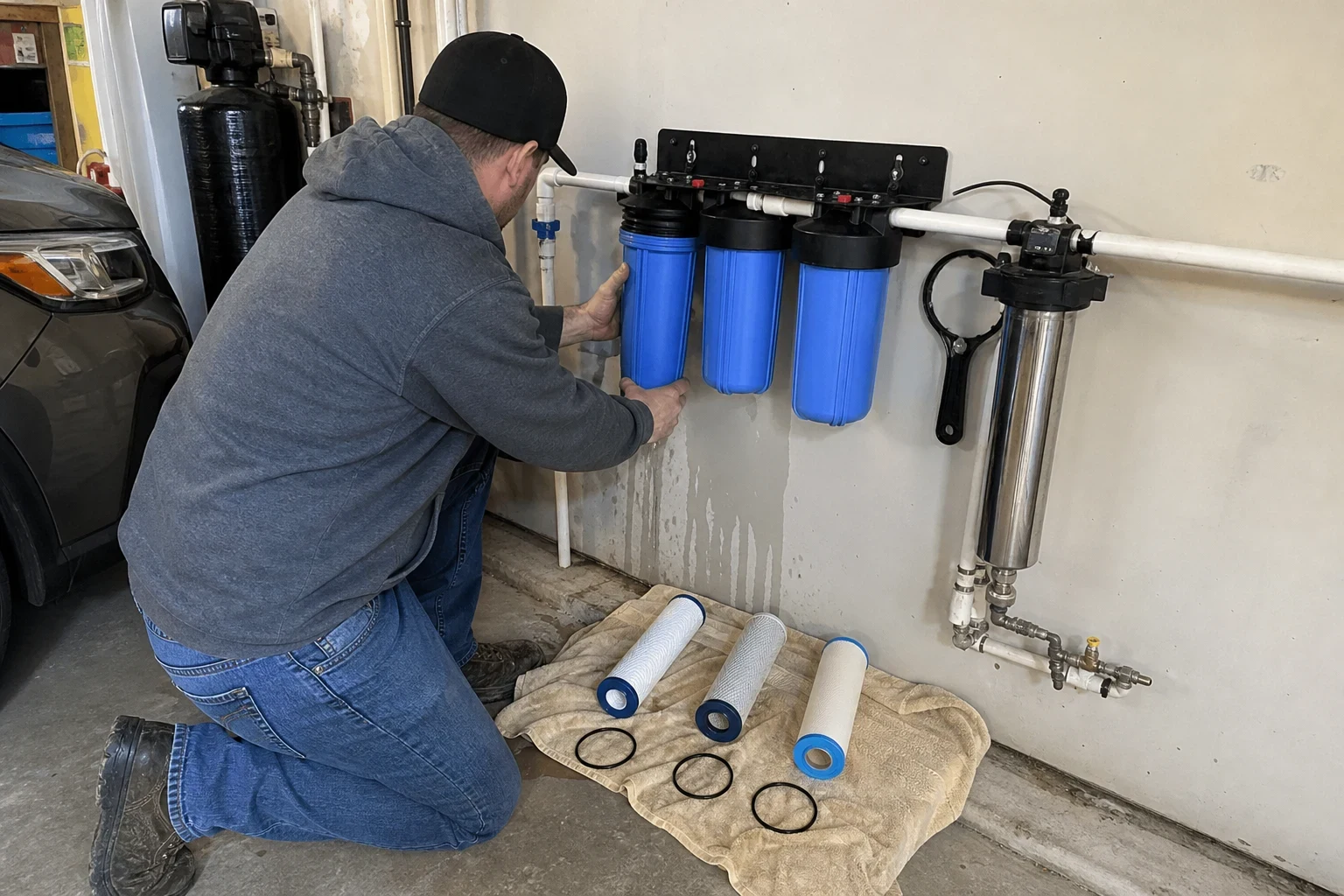
Service that keeps a good system working
Every filter eventually fills up. Carbon reaches its limit and stops removing taste and odor. Sediment cartridges load with grit until pressure drops at the shower. An RO membrane slowly loses its ability to reject what it was installed to catch. None of this announces itself loudly, which is why scheduled filter replacement and maintenance matters more than most people expect.
We treat a cartridge change as a small installation job, not a swap. The details that decide whether a housing seals for months or weeps onto the cabinet floor are the ones we slow down for: a clean O-ring groove, the right lubricant, a housing tightened firmly but never cranked. We service systems we installed and systems someone else put in, from whole-house carbon filtration to under-sink reverse osmosis.
What a maintenance visit includes
Correct replacement cartridges
We match each cartridge to the housing size, micron rating and media your system was designed for. A cheaper cartridge that fits loosely lets water slip around the filter, so we check the fit before closing anything up.
Housing cleaning and sanitizing
Each sump is emptied, scrubbed and sanitized before the new cartridge goes in. Old housings can build up a film that a fresh filter alone will not fix.
New O-rings, properly seated
We inspect every O-ring and replace any that are flattened, nicked or dried out. Each one gets a thin coat of food-grade silicone and is seated evenly in its groove, which is where most slow leaks start.
Flush and pressure check
New carbon is flushed until the fine dust clears, and we compare pressure before and after the system where gauges allow. On RO units we check the storage tank's air charge and the drain line.
Iron filter and softener checks
For iron and sediment filtration and softeners, we look at the control valve settings, the backwash or regeneration schedule and the brine tank for salt bridges or sludge.
A dated record
We label each housing with the service date and leave you a short note on what was replaced and what to watch for next.
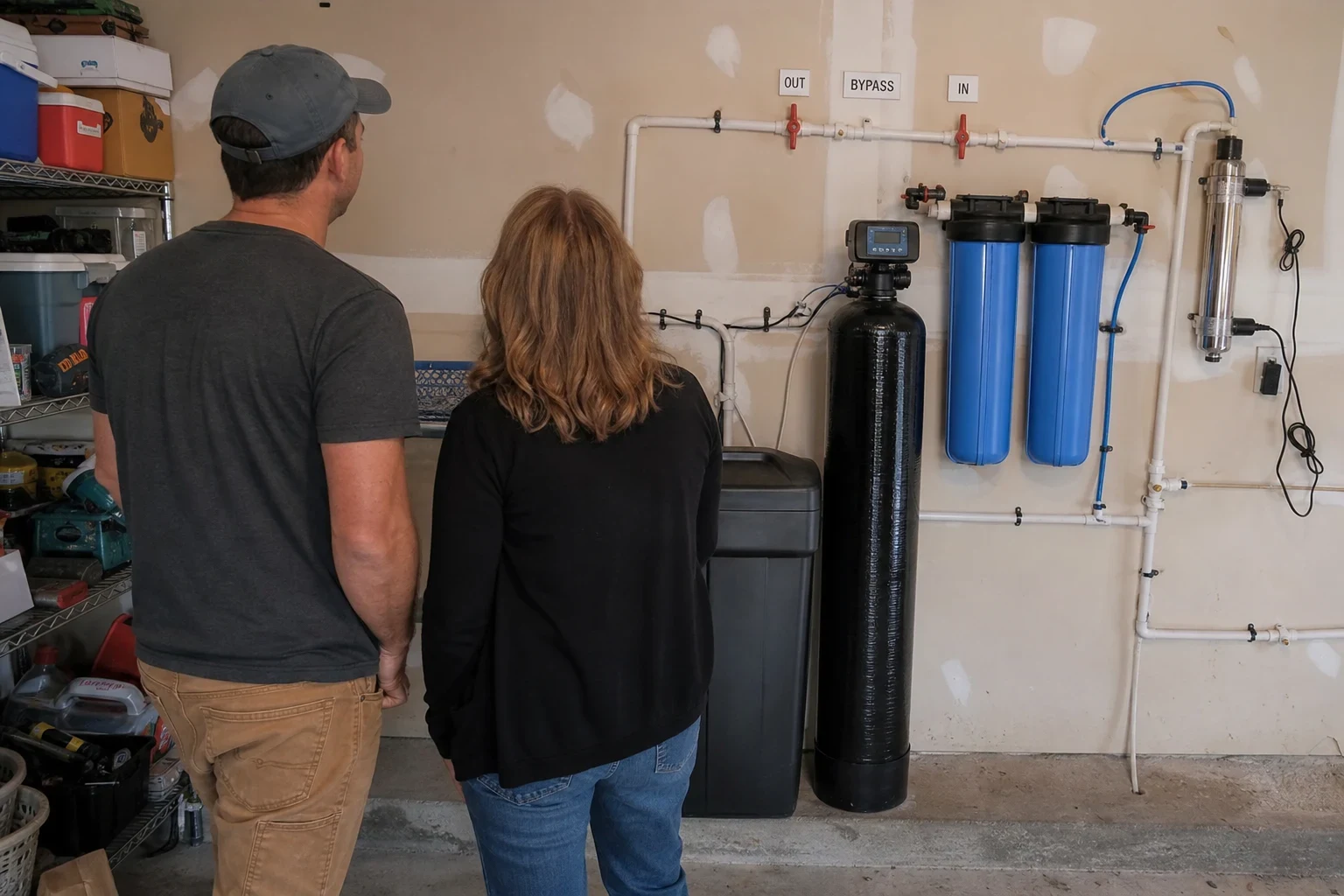
When it is time for a filter change
- Chlorine or an earthy flavor returns
- Once the carbon is used up, a chlorine note or an earthy flavor creeps back into a glass from the tap. Taste usually changes before anything else does.
- Pressure has dropped
- A shower that feels weaker than it used to, especially when another tap is running, usually points to a clogged sediment cartridge.
- Water at the housing
- A damp ring under a filter housing or a drip at a push-fit connection means an O-ring or fitting needs attention before it becomes a stained cabinet.
- The RO faucet runs slow or the drain never stops
- A sluggish drinking water faucet, or a drain line that seems to run without pause, often traces back to clogged prefilters. It can also mean the membrane is past its useful life or the storage tank's air pressure has dropped too low.
- Stains are returning
- Orange or tan marks reappearing in sinks after an iron filter was installed suggest the media or backwash cycle needs a look.
- No one recalls the last change
- If nobody in the house knows when the cartridges were last swapped, that is reason enough to open the housings and look.
How a service visit runs
- 1
A quick conversation by phone
You tell us what system you have and what you have noticed. If you know the brand or can read a cartridge label, that helps us bring the right parts the first time.
- 2
Look before we loosen
We note pressure, check for existing leaks and photograph the setup. Water to the system is shut off only for the part of the visit that needs it.
- 3
Replace, clean and reseal
Old cartridges come out, housings are cleaned and sanitized, O-rings are replaced or reseated and new filters go in. Housings are hand-tightened with a wrench just past snug.
- 4
Flush, test and watch
We flush the system, restore pressure slowly and stay long enough to confirm every joint is dry. In summer, garage-mounted systems in Lewisville sit in real heat, so we pay extra attention to brittle tubing and fittings there.
- 5
Clean up and record
Spent cartridges leave with us, the cabinet or utility area is wiped dry, and you get a dated note with the suggested timing for your next service.
What moves the cost of maintenance
Most of the price is the cartridges themselves, and those vary widely by system. Labor comes down to the number of housings on your setup and whether we can get to them without a struggle. We explain the parts and labor before starting, so the total is clear ahead of time.
- Number of systems and stages
- A single whole-house housing is a short visit. A home with a sediment filter, carbon tank and five-stage RO unit takes longer and uses more parts.
- Cartridge and media type
- Standard sediment cartridges cost far less than specialty carbon blocks or an RO membrane. Iron filter media and softener resin are replaced much less often but cost more when they are due.
- Condition of the housings
- A housing seized from years without service, or one with a cracked sump, adds time and sometimes a replacement part. We show you what we find before replacing anything beyond the cartridges.
- Access
- A crowded sink cabinet or a system tucked behind storage in the garage can take longer to work on safely.
Filter maintenance questions
- How often should my filters be changed?
- The right interval comes down to the system you have and the amount of water your family draws each day. Prefilters for sediment and carbon typically need changing anywhere from every few months to once a year, while RO membranes and whole-house carbon media last considerably longer. We look at your actual cartridges and pressure, then suggest a schedule that fits your household rather than a generic calendar.
- Do you service systems you did not install?
- Yes. We work on most common brands of whole-house filters, under-sink RO units, iron filters and softeners. If a part is unusual, we will tell you on the phone whether we can source it before we schedule.
- Will I be without water during the visit?
- Only briefly, and often only to the one system we are servicing. Many setups have a bypass valve, so the rest of your home keeps running while we work.
- Can I change the cartridges on my own?
- Plenty of homeowners handle it, and we are happy to walk you through the steps. Trouble tends to start with an O-ring that went in dry or got pinched, or a housing turned too tight, which can crack days later. We can take care of it for you, or do one change with you watching so you know what to look for next time.
- Should I have my water tested at the same time?
- If your water has changed or you are unsure your system still fits it, pairing a visit with water testing is a sensible step. It tells you whether your current filters are the right ones or whether something like iron and sediment filtration would serve you better.
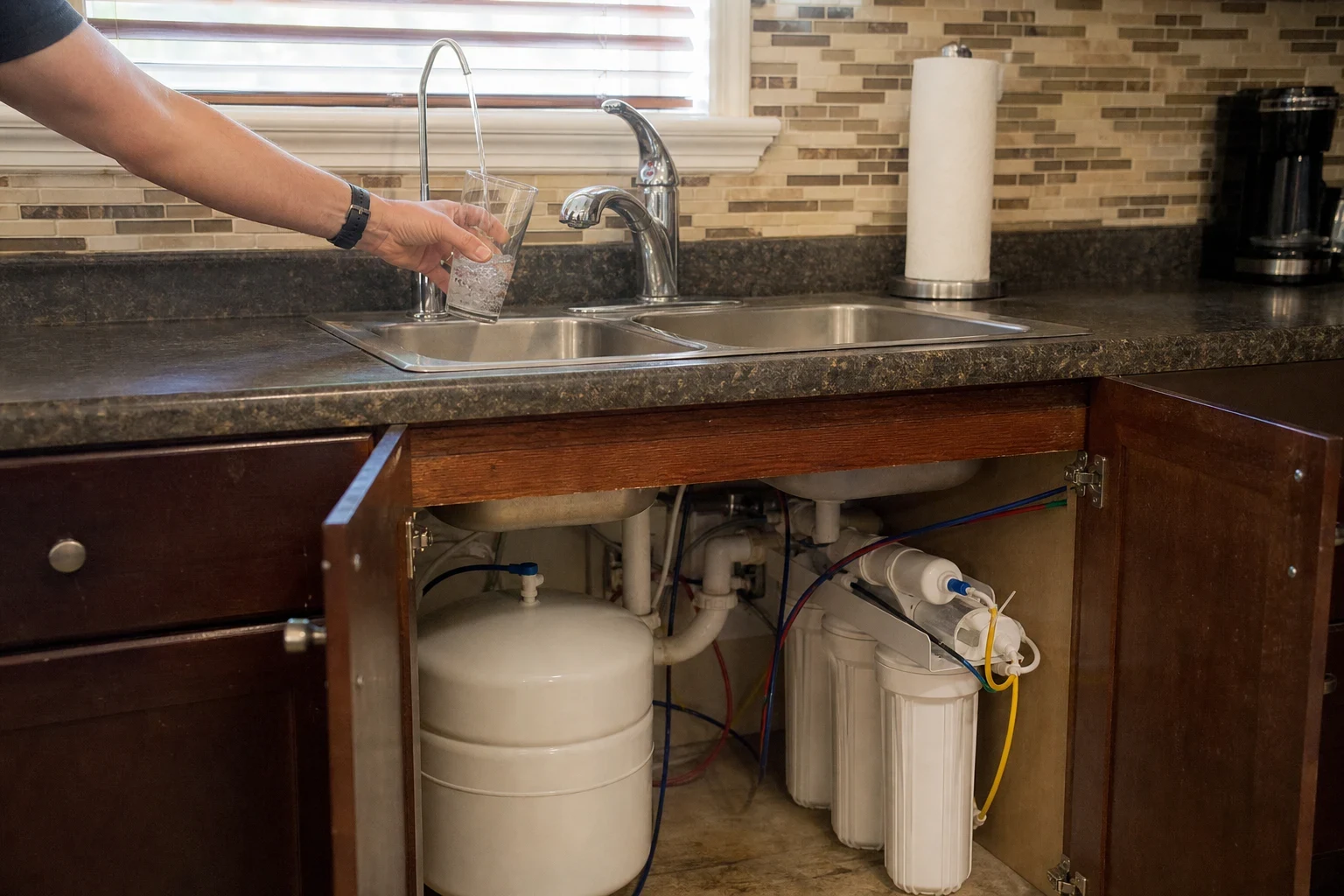
Ready for a filter service done properly
Let us know which filters you have and roughly when they were last changed. We will bring the right cartridges and take the time to make every seal right.